Rust Check for SUVs and Pickup Trucks: Extra Protection for Larger Vehicles
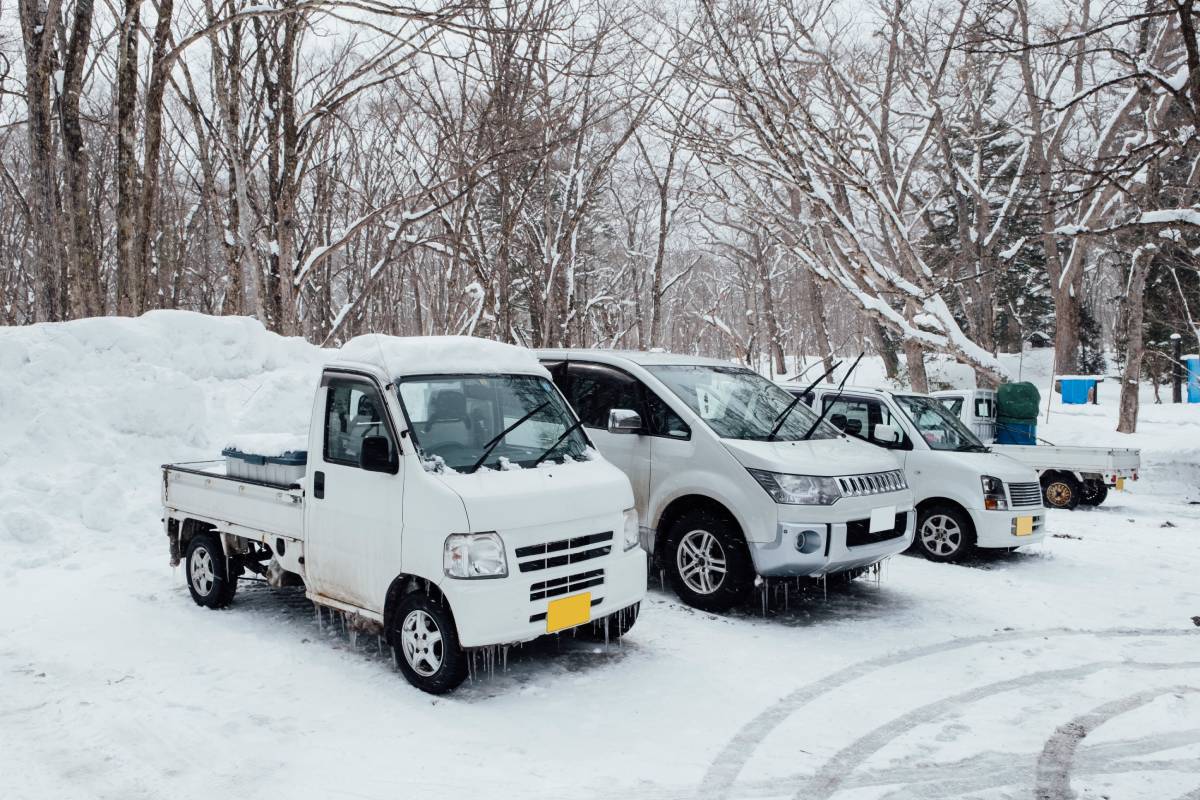
Owning an SUV or pickup truck in Canada comes with a simple truth: your vehicle faces harsher conditions than almost anywhere else in the world. From salt-soaked winter roads to mud, gravel, humidity, and constant temperature swings, our climate creates the perfect environment for rust.
And while all vehicles can corrode, larger vehicles - full-size SUVs, crossovers, work trucks, and pickup trucks - are significantly more vulnerable. Their size, structure, and driving patterns create unique opportunities for rust to form faster and spread deeper.
That’s why so many Canadians search for:
- rust proofing near me Ontario
- trusted rust control for trucks
- best rust protection in Canada
- Rust Check for pickup trucks
But here’s the problem…
Most drivers don’t actually know how rust forms, how fast it spreads, or what type of rust proofing actually works in the real world. Add in myths, confusion, outdated advice, and inconsistent products, and the average truck owner is left unsure:
- Do I really need rust proofing?
- Is Rust Check better than undercoating?
- Why do my rocker panels rust first?
- Are new trucks already rust-proof from the factory?
- Do electronic modules work or are they a gimmick?
- What’s the difference between rust proofing and rust control?
This article answers all of those questions - clearly, directly, and without technical jargon.
Whether you drive a Ram 1500, Ford F-150, Chevy Silverado, Toyota Tacoma, Honda Pilot, Jeep Grand Cherokee, GMC Sierra, or any commercial truck, this guide explains what kind of rust protection you actually need and why Rust Check remains one of the most trusted systems in Canada for larger vehicles.
Tale of Contents
- Key Takeaways
- Why Rust Protection Matters More for Larger Vehicles in Canada
- What Confuses Most Drivers About Rust Proofing? (Clearing the Ambiguities)
- Why Rust Check Works Better for SUVs and Pickup Trucks
- Every Rust-Prone Area on SUVs & Trucks (And Why They Fail)
- When Should You Rust Proof Your Truck or SUV?
- Rust Check vs. Other Rust Proofing Methods (Clear Comparison)
- How Rust Proofing Helps Maintain Resale Value
- Common Questions Truck Owners Ask (FAQ Expansion)
- Conclusion
Key Takeaways
- Canadian winters make SUVs and pickup trucks rust faster than smaller cars.
- Rust Check’s liquid formula penetrates deep into seams, joints, frame rails, and hidden cavities.
- Larger vehicles have more exposed metal and more rust-prone zones.
- Thick undercoatings often crack in cold weather, trapping moisture.
- Annual rust control is the best strategy for long-term protection.
- New trucks are not fully protected from the factory - this is a major misconception.
- Rust proofing increases resale value and reduces long-term repair costs.
- Rust Check is available across Ontario and Canada for easy local service.
Why Rust Protection Matters More for Larger Vehicles in Canada
More Road Exposure = More Rust Risk
An SUV or pickup truck sits higher and has larger wheel wells, wider frames, and more underbody exposure. This means:
- More salt hits the underside
- More gravel chips the paint
- More slush collects on components
- More moisture sits inside hollow areas
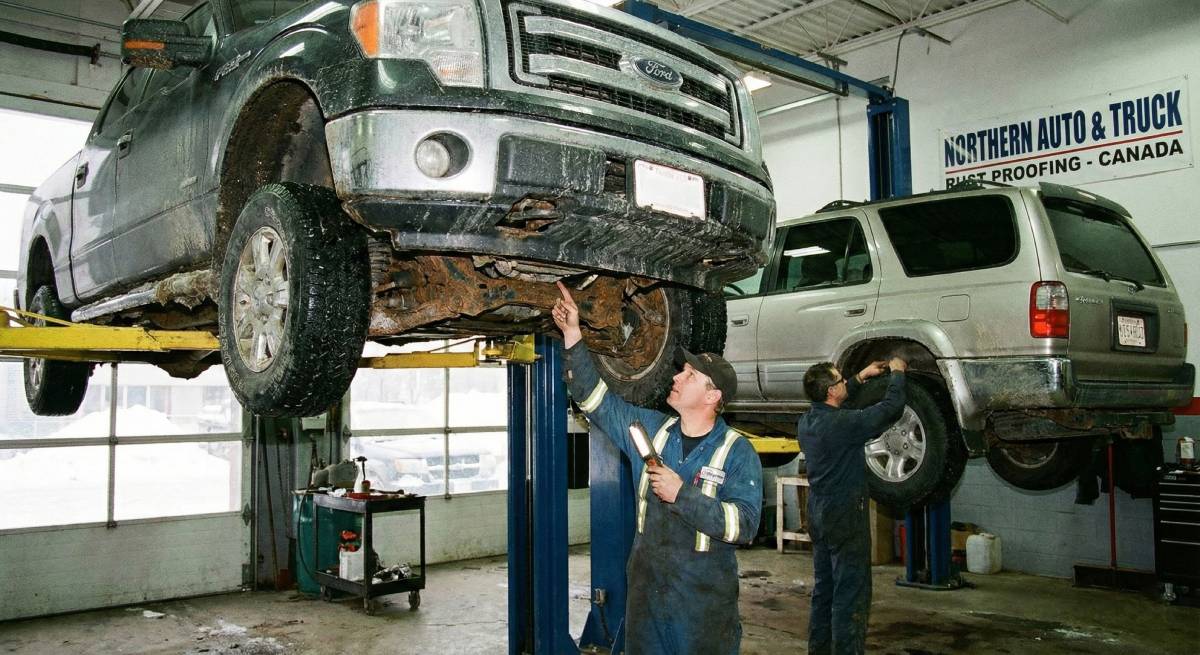
Even trucks that look clean on the outside may hide rust inside:
- frame rails
- rocker panels
- cab corners
- tailgate seams
- body mounts
- suspension components
These hidden rust zones are exactly where trucks fail safety inspections or lose structural strength over time.
Canadian Weather Accelerates Rust Faster Than You Think
Rust forms when oxygen + metal + moisture combine. But in Canada, salt becomes the fourth ingredient - and the most destructive.
Salt:
- lowers freezing point
- sticks to metal
- attracts moisture
- speeds oxidation
The freeze–thaw cycle expands existing corrosion cracks, allowing rust to creep deeper.
This is why Canadian trucks can show signs of rust after only one winter if unprotected.
What Confuses Most Drivers About Rust Proofing? (Clearing the Ambiguities)
To make this as helpful as possible, here are the biggest misconceptions and unanswered questions truck owners have:
- “A new truck already has rust protection, right?”
No, this is the #1 misunderstanding.
Factory coatings are minimal and they rarely protect internal cavities.
- “Is undercoating enough?”
Not for Canada.
Undercoating is not rust proofing.
- “Will rust proofing stop existing rust?”
It won’t reverse it, but proper rust control prevents it from spreading.
- “Do electronic rust modules work?”
They may work on ships, not on trucks exposed to real road salt and mud.
- “Should I get rust proofing every year?”
Yes, annual treatment maintains the protective layer.
- “Will Rust Check drip?”
The product is designed to creep. Minor dripping is normal and indicates penetration.
- “What’s the difference between rust proofing and rust control?”
Rust proofing = preventing rust before it starts.
Rust control = slowing or stopping rust that already exists.
Rust Check does both.
- “Is oil-based rust proofing bad for rubber or electronics?”
Rust Check is formulated specifically not to harm rubber, wiring, or sensors.
Most drivers don’t ask these questions until it’s too late - when corrosion is visible and repair costs become expensive.
Why Rust Check Works Better for SUVs and Pickup Trucks
Liquid, Penetrating Formula
Rust Check uses a light, creeping liquid that moves into seams, welds, joints, and enclosed cavities - areas where rust starts but undercoating cannot reach.
Why this matters:
- Rocker panels rust from the inside → Rust Check reaches the inside.
- Frame rails collect moisture → Rust Check displaces the moisture.
- Tailgate seams trap salt → Rust Check protects hidden joints.
Nothing thick or rubberized can do this.
Self-Healing Protection
Thick undercoatings crack in winter, but Rust Check:
- stays flexible
- re-coats itself
- flows into new scratches
- remains active year-round
This makes it extremely effective in Ontario, Quebec, Nova Scotia, and other salt-heavy provinces.
Better for Large Frames + Longer Wheelbases
Pickup trucks have:
- open C-channel frames
- pocketed cross members
- countless nooks for rust to begin unnoticed
Rust Check’s formula directly addresses this unique structure, making it more suitable for larger vehicles than any other rust protection method.
If you want to be rust-free this year, it’s time to take care of your vehicle once and for all. Find your nearest Rust Check center now and start getting real protection.
Every Rust-Prone Area on SUVs & Trucks (And Why They Fail)
Below is a breakdown of every common rust zone, why it happens, and how Rust Check stops or slows corrosion.
- Rocker Panels
Reason: Moisture and salt collect inside the panel.
Rust Check: Penetrates seams and prevents internal corrosion.
- Cab Corners
Reason: Water from rear wheels splashes into seams.
Rust Check: Coats the internal weld points.
- Wheel Wells
Reason: Salt impact, gravel chips, and winter slush.
Rust Check: Forms a protective barrier over exposed metal.
- Frame Rails
Reason: Hollow spaces trap moisture and road debris.
Rust Check: Flows inside the frame through access points.
- Brake & Fuel Lines
Reason: Corrode faster from salt spray.
Rust Check: Protects metal lines and slows deterioration.
- Tailgate/Liftgate Seams
Reason: Water drains poorly and collects in corners.
Rust Check: Prevents seam corrosion and hinge rust.
- Undercarriage Components
Reason: High impact from winter salt and gravel.
Rust Check: Provides a corrosion-resistant coating.
- Electrical Connections
Reason: Corrosion increases resistance and can cause failures.
Rust Check: Protects harnesses, connectors, and modules.
Additional resources
- The Complete Guide to Rust Protection Aerosols: Keep Your Vehicle Safe from Corrosion in Canada
- The Complete Guide to Rustproof Paints and Primers: Stop Rust Before It Starts in Canada
- Rust Check vs. Dealer Packages: Which Is Better Value?
- Rust Control Maintenance Tips: How to Extend the Life of Your Rust Protection?
When Should You Rust Proof Your Truck or SUV?
Brand-New Vehicles
This is the best time.
Factory coatings are minimal - internal cavities remain unprotected.
After One Winter
Drivers often notice:
- paint bubbles
- orange streaks
- rust flakes
- corrosion on suspension parts
This is the ideal time for rust control to stop spread.
Before Winter Begins
Creates the strongest protective barrier.
After Off-Road or Rural Driving
Mud holds moisture against metal and accelerates rust.
Annually
Rust Check is designed for yearly application to maintain full coverage.
Rust Check vs. Other Rust Proofing Methods (Clear Comparison)
- Rust Check vs. Tar-Based Undercoating
Undercoating:
- thick
- cracks in winter
- traps moisture
- does NOT reach cavities
Rust Check:
- penetrates
- self-heals
- protects cavities
- better for trucks
- Rust Check vs. Electronic Modules
Modules claim to prevent corrosion by electrical pulses.
They do not protect from salt, chips, or trapped moisture.
- Rust Check vs. DIY Sprays
DIY sprays are surface-level only and never access truck frames.
- Rust Check vs. Factory Coatings
Factory coating is paint or primer - not rust protection.
How Rust Proofing Helps Maintain Resale Value
Canada’s used truck market is strong - especially for clean vehicles.
Buyers check one thing first: rust.
Proper rust protection means:
- higher resale value
- faster sale
- stronger trade-in offers
- better long-term structural integrity
A rusted truck loses thousands in value.
An SUV with documented annual rust proofing sells immediately.
Common Questions Truck Owners Ask (FAQ Expansion)
- Why do SUVs and pickup trucks rust faster in Canada?
Because they face more salt, moisture, slush, and gravel. Larger vehicles also have more hidden cavities where water collects. That’s why annual rust proofing is essential for long-term protection.
- Do brand-new trucks need Rust Check?
Yes. Factory coatings are minimal and don’t protect inner panels or frame cavities. Applying Rust Check from year one gives the strongest long-term rust protection.
- What’s the difference between rust proofing and rust control?
Rust proofing prevents rust from starting. Rust control slows existing rust. Rust Check does both by penetrating seams, cavities, and hidden areas.
- Is undercoating enough for Canadian winters?
No. Thick undercoating can crack in cold weather and doesn’t reach internal areas. Rust Check provides deeper, more complete rust control for larger vehicles.
- How often should I get Rust Check done?
Once a year. Winter salt breaks down protective layers, so annual rust proofing keeps your SUV or truck fully protected.
- Is dripping after Rust Check normal?
Yes. Light dripping shows the product is creeping into seams and cavities. It stops quickly and means the formula is working properly.
- Is Rust Check safe for sensors and electronics?
Absolutely. Rust Check is safe for wiring, sensors, modules, and modern vehicle systems. It also prevents corrosion in electrical connections.
Conclusion: Give Your SUV or Pickup Truck the Rust Protection It Deserves
Rust isn’t just an appearance issue - it’s a structural threat that affects the performance, value, and lifespan of your truck or SUV. Canadian roads are harsh, and without proper rust proofing, even the toughest vehicles eventually show signs of corrosion.
Rust Check provides deep, penetrating, winter-ready rust control that works where larger vehicles need it most: frame rails, rocker panels, cab corners, tailgate seams, and hidden cavities.
Whether your truck is brand new or a decade old, Rust Check helps:
- protect your investment
- avoid expensive repairs
- maintain resale value
- extend vehicle life
- keep your truck looking and performing like new
Why Canadian Drivers Trust RustCheck.ca – Reliable Rust Protection for Every Season
For over 50 years, RustCheck.ca has helped Canadians shield their vehicles from rust, salt, moisture, and the harsh realities of winter driving. Whether it’s a daily commuter or a full commercial fleet, our rust proofing and rust control treatments extend vehicle life, boost resale value, and give you peace of mind on the road.
Our Services Include:
Rust Check Body Panel Protection – Canada’s original and most trusted liquid rust inhibitor since 1973.
Coat & Protect Undercarriage Treatment – A premium corrosion barrier engineered for long-term durability.
Two-Step Rust Check Application – Targeted protection for both body panels and undercarriage components.
Fleet, Truck & Trailer Rust Control Programs – Cost-effective solutions for business, municipal, and government vehicles.
New Vehicle Rust Protection – Prevent corrosion before it starts.
Specialty Vehicle Programs – Custom rust control for ambulances, cranes, heavy equipment, and commercial units.
Seasonal Vehicle Care Resources – Expert tips, guides, and articles to help you stay ahead of rust year-round.
With Rust Check locations across Canada, finding a nearby dealer is simple. Explore our nationwide network to book your appointment and keep your vehicle protected-wherever you drive.
Whether you're safeguarding your everyday vehicle, maintaining a reliable work fleet, or protecting a brand-new purchase, RustCheck.ca delivers the expertise, technology, and nationwide support you need to stay ahead of rust.