The Complete Guide to Rust Protection Aerosols: Keep Your Vehicle Safe from Corrosion in Canada
When you drive in Canada-especially Ontario-you’re battling one of the harshest rust-producing environments in the world. Road salt, calcium chloride, slush, moisture, freeze–thaw cycles, and humidity work like a slow acid on your vehicle’s metal. And while professional Rust Proofing treatments are essential, more and more Canadians are adding rust protection aerosols into their yearly maintenance routine.
These aerosols aren’t just “spray-and-pray” products anymore. Today’s formulas-especially trusted brands like Rust Check-use advanced chemistry to penetrate seams, coat internal panels, stop existing corrosion from spreading, and create a protective barrier where road salt typically attacks.
This guide goes beyond generic tips. You’ll learn exactly how rust protection aerosols work, which type your vehicle needs, how they compare to professional Rust Check treatments, and how to use them strategically to extend your vehicle’s life in Canadian conditions.
Table of Contents
- Key Takeaways
- Why Rust Protection Aerosols Are Essential in Canadian & Ontario Winters
- Types of Rust Protection Aerosols
- How Rust Protection Aerosols Work (The Science Explained Simply)
- Aerosols vs. Professional Rust Proofing - What’s the Difference?
- Where to Apply Rust Protection Aerosols for Maximum Effect
- How Often to Apply Rust Control Aerosols in Canada
- What Makes Rust Check Aerosols Different? (Detailed Comparison)
- A Complete Seasonal DIY Rust Protection Routine for Canadians
- Frequently Asked Questions (FAQs)
- Conclusion: The Best Rust Protection Strategy for Canadian Drivers
Key Takeaways
- Rust protection aerosols are a must-have add-on to professional Rust Proofing for Canadian drivers.
- Penetrants, creepers, lanolin sprays, and corrosion inhibitors all play different roles in Rust Control.
- Rust Check aerosols offer deeper penetration and active corrosion arresting, ideal for Ontario conditions.
- DIY aerosol use doesn’t replace a Rust Check treatment, but it fills the gaps between annual appointments.
- Applying aerosols to hinges, seams, underbody components, and exposed metal help prevent long-term damage.
- The best rust protection strategy is layered: annual Rust Check + periodic aerosol touch-ups.
- Aerosols are perfect for “rust-prone zones” most people never think about-inside doors, trunk seams, fuel filler areas, and brake line channels.
Why Rust Protection Aerosols Matter More in Canada Than Anywhere Else
Canada uses far more road salt and brine solutions than most countries-some provinces apply over 5 million tonnes per year. Ontario alone uses thousands of tonnes of calcium chloride brine, which accelerates corrosion faster than traditional rock salt.
Here’s what Canadian drivers face:
- Freeze–Thaw Cycles
Metal expands and contracts, breaking factory coatings and exposing raw steel.
- Salt Brine Splashes
Brine sticks to metal, creating a highly conductive environment for rust.
- Moisture Trapping
Canadian winters trap moisture inside:
- wheel wells
- frame channels
- door seams
- trunk lids
- rocker panels
Once moisture gets in, it begins the oxidation process-even on coated panels.
This is why rust protection aerosols have become essential. They reach internal areas that do not get coated during factory manufacturing, and they help maintain Rust Control between professional applications.
Types of Rust Protection Aerosols (And When to Use Each One)
Not all aerosols are the same. Understanding the chemistry helps you choose the right formula for your vehicle.
Penetrating Rust Proofing Aerosols
These are the heart of most Rust Control routines.
Penetrants are designed to:
- Creep into seams and pinch welds
- Displace moisture
- Arrest early-stage rust
- Coat internal metal surfaces
- Stop oxygen from reaching metal
Rust Check’s aerosol formulations are engineered for deep penetration, meaning they reach seams traditional thick coatings cannot. This matters in Ontario because brine seeps into microscopic gaps.
Where to use penetrating aerosols:
- Inside doors
- Tailgates
- Rear quarter panels
- Trunk seams
- Hood lips
- Rocker panels
- Fuel filler surrounds
- Around spot-welded seams
Best for:
Drivers who want active Rust Control inside hidden cavities.
Protective Coating Aerosols (Surface Sealants)
These aerosols create a surface barrier that prevents salt and moisture from clinging to metal. Unlike thick undercoats, they remain flexible, so they won’t crack during cold winters.
They help with:
- Frame rails
- Suspension arms
- Brake shields
- Metal brackets
- Battery trays
Rust Check’s “Coat & Protect” is an example-it is thicker than a penetrant but not as rigid as tar-based undercoating. It forms a durable, salt-resistant barrier.
Drivers who want a long-lasting topcoat on exposed underbody components.
Corrosion-Inhibiting Aerosols (Rust Arresters)
These are specialized aerosols designed to stop early rust from advancing. They don’t just coat metal-they chemically interact with rust to slow oxidation.
This category is often where Rust Check products outperform generic hardware-store sprays. Their formulas carry inhibitors into the corrosion layer, reducing the electrochemical reaction.
Use on:
- Early rust patches on frame rails
- Ball joint housings
- Brake line channels
- Weld points
- Stone-chipped areas
Older vehicles or Ontario commuters who see heavy salt exposure.
Winter-Specific Rust Protection Sprays
Winter aerosols are engineered for:
- Extreme cold
- High moisture
- Salt saturation
- Freeze–thaw movement
Rust Check has cold-weather-friendly formulas that maintain viscosity even below freezing-important because many aerosols thicken in cold temps and stop penetrating.
Drivers who want year-round Rust Protection, even when temperatures drop.
How Rust Protection Aerosols Work (The Science in Simple Terms)
Here’s the simplified science behind effective Rust Proofing aerosols:
Step 1: Moisture Displacement
Water is pushed away from metal through chemical “wetting agents.”
Step 2: Penetration
Creeping oils flow into:
- seams
- weld lines
- overlaps
- internal cavities
Thickness is engineered to wick deeper over hours.
Step 3: Corrosion Arresting
Anti-corrosion additives slow oxidation by:
- neutralizing contaminants
- reducing oxygen exposure
- forming a stable barrier
Step 4: Long-Term Rust Protection
The film stays active for months, unlike dry coatings that crack.
Step 5: Re-Activation
When heated (summer, engine heat) the product creeps again, reinforcing coverage.
This is why Rust Check formulations are trusted-they remain active in both warm and cold environments.
Aerosols vs. Professional Rust Proofing - What’s the Difference?
Aerosols are supportive, not replacement, tools.
Professional Rust Check Treatments Offer:
- Pressurized application
- Strategic injection into factory access points
- Full-coverage underbody spraying
- Interior seam flooding
- Annual inspection
- Specialized corrosion inhibitors
Aerosols give you targeted protection. Professional treatments give you whole-vehicle Rust Control.
Where aerosols shine:
- Door hinges
- Hood and trunk seams
- Battery trays
- Brake line brackets
- Stone-chip touch-ups
- Seasonal salt-protection refresh
Aerosols are perfect for maintenance between annual Rust Check appointments.
Ready to give your vehicle real protection-beyond what a quick rinse can offer?
Canada’s winters don’t wait, and rust doesn’t take days off. If you want year-round confidence, find a trusted Rust Check dealer near you and get your vehicle professionally protected.
Book your appointment today and stay ahead of corrosion before it starts.
Where to Apply Rust Protection Aerosols for Maximum Effect
Most drivers don’t know where salt actually builds up. These are the highest-risk areas in Canada:
1. Wheel Wells
Salt and slush slam the inner metal daily.
Use penetrating aerosols around:
- shock mounts
- strut towers
- inner fender lips
2. Brake Lines & Fuel Lines
Ontario’s biggest rust-related safety failures come from corroded lines.
Spray:
- line clips
- exposed sections
- brackets
3. Door Bottoms & Drains
Salt brine gets into door seams and sits there.
Apply through:
- drain holes
- bottom seams
- hinge areas
4. Trunk & Hatch Seams
Moisture collects in lip seams.
Spray:
- latch area
- lower seam
- inner tailgate structure
5. Rocker Panels
These rust from the inside out.
If your car has factory access holes, use a long wand attachment.
6. Engine Bay Metal Components
Avoid belts and electronics-focus on:
- battery tray
- fender seams
- exposed brackets
7. Frame Rails (On Trucks)
Salt sits on the top side of the frame, not just underneath.
Use aerosol creepers to flood:
- crossmembers
- welds
- inner channels
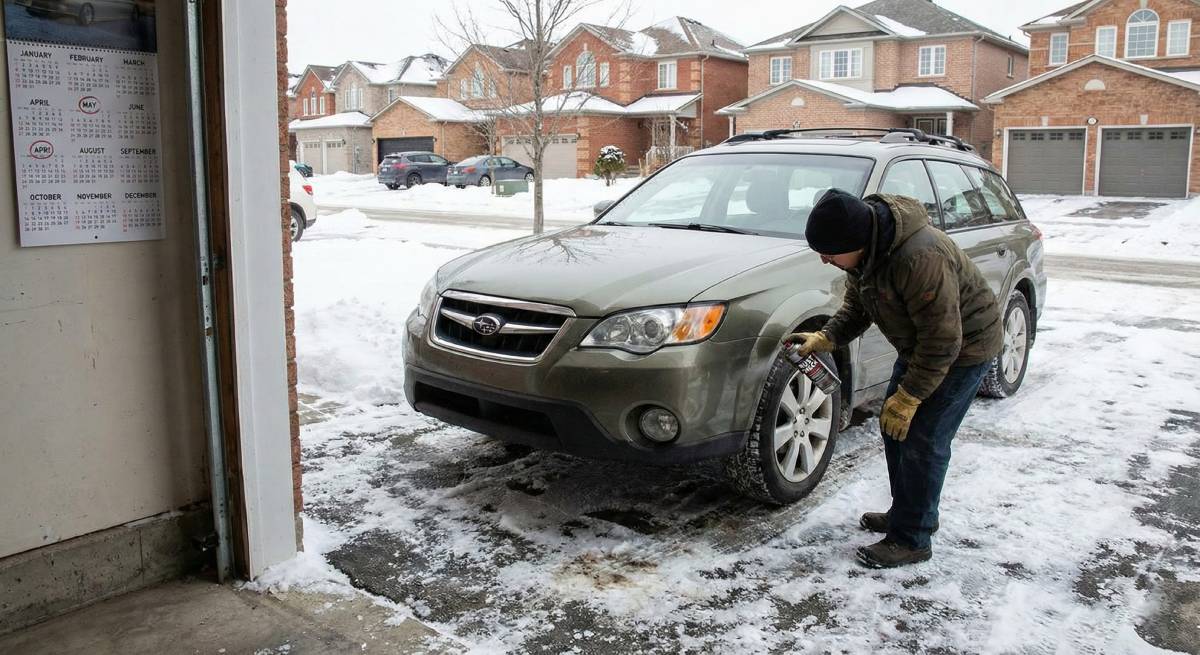
How Often Should You Use Rust Protection Aerosols?
A good maintenance routine in Canada looks like this:
Annual:
Professional Rust Check application.
Seasonal (3x per year):
Aerosol maintenance:
- Early winter
- Mid-winter
- Early spring
After Salt-Heavy Weeks:
Touch-up exposed metal.
After Underbody Pressure Washing:
Reapply on vulnerable components.
This layered approach extends your vehicle’s structural life significantly.
Comparing Rust Protection Aerosols - What Makes Rust Check Different?
Here’s what sets Rust Check aerosols apart from typical retail sprays:
- Active Rust Control Formulas
Most consumer aerosols are just oily barriers. Rust Check’s contain active corrosion inhibitors.
- Superior Creep Ability
Their low surface tension allows deep seam penetration.
- Temperature Stability
Designed for Canadian winters-won’t thicken or harden.
- No Tar or Asphalt
No cracking, peeling, or moisture trapping.
- OEM-Safe
Won’t harm rubber seals, sensors, paint, or factory coatings.
Ideal for maintaining the integrity of your annual Rust Proofing.
A Complete DIY Aerosol Routine for Canadian Winters
Here’s a practical routine any driver can follow:
Step 1: Wash the vehicle, focusing on the underbody.
Salt needs to be removed before applying anything.
Step 2: Let it dry completely.
Moisture prevents proper penetration.
Step 3: Use a penetrating aerosol inside cavities.
Spray doors, rocker panels, trunk seams, fuel filler areas.
Step 4: Apply a protective topcoat aerosol on exposed metal.
Coat suspension parts, brackets, and structural components.
Step 5: Inspect after first major thaw.
Touch up any areas affected by salt.
Step 6: Refresh in spring.
Remove winter grime and reapply to vulnerable metal.
This routine-combined with annual Rust Check service-offers some of the strongest Rust Protection available.
Want stronger year-round protection?
Find a certified Rust Check location near you and give your vehicle the defense it deserves-before salt and moisture have a chance to do real damage.
FAQs
- Are rust protection aerosols enough, or do I still need a Rust Check treatment?
Aerosols are great for touch-ups, but they don’t replace a full Rust Check service. Use aerosols between annual appointments to protect hinges, seams, brake lines, and exposed metal.
- How often should I apply rust control aerosols in Ontario?
Most drivers benefit from using aerosols 2–3 times a year-early winter, mid-winter, and spring. Heavy-salt routes may need monthly touch-ups on brake lines and wheel-well components.
- What’s the difference between a penetrant and a protective coating spray?
Penetrants creep into seams and stop rust from spreading. Protective coatings create a thicker, salt-resistant barrier for exposed underbody parts. Most vehicles need both.
- Can aerosols stop rust that has already started?
Yes, on early rust. Corrosion-inhibiting aerosols slow oxidation and protect the area from moisture and salt. They won’t fix severe rust but help prevent progression.
- Are Rust Check aerosols safe for modern vehicles with sensors?
Yes. Rust Check formulas are safe for paint, wiring, sensors, rubber seals, and coatings. They won’t interfere with electronics or ADAS systems.
- What areas should I focus on for the best rust protection?
Key zones include brake and fuel lines, wheel wells, rocker panels, door bottoms, trunk seams, and frame rails. These areas see the most salt and moisture in Canada.
Use a penetrant for seams and internal cavities, a topcoat for exposed metal, and an inhibitor for small rust spots. For Canadian winters, choose cold-weather-stable formulas like Rust Check.
Conclusion: The Best Rust Protection Strategy for Canadian Drivers
Rust protection isn’t one product-it’s a system.
In Canada’s harsh climate, the best approach is layering:
- Annual professional Rust Check treatment for full-body coverage
- Seasonal aerosol touch-ups for high-risk and hidden areas
- Corrosion-inhibiting aerosols for early rust
- Topcoat aerosols for exposed components
This combination gives your vehicle the strongest possible Rust Control in Ontario and across Canada, helping it last longer, stay safer, and retain value.
Why Canadian Drivers Trust RustCheck.ca for Year-Round Rust Protection
For over 50 years, RustCheck.ca has helped Canadians protect their vehicles from rust, road salt, moisture, and brutal winter conditions. Whether you’re a daily commuter or managing a commercial fleet, our rust proofing and rust control solutions extend vehicle life, help maintain resale value, and keep you confident on the road.
Our Core Services:
- Rust Check Body Panel Protection – Canada’s original liquid rust inhibitor, trusted since 1973.
- Coat & Protect Undercarriage Treatment – A durable corrosion barrier designed for long-term performance.
- Two-Step Rust Check Application – Complete coverage for body panels, seams, and undercarriage components.
- Fleet, Truck & Trailer Rust Control Programs – Cost-effective protection for business, municipal, and government vehicles.
- New Vehicle Rust Protection – Prevent corrosion from the very start.
- Specialty Vehicle Programs – Customized protection for emergency vehicles, heavy equipment, cranes, and commercial units.
- Seasonal Care Resources – Expert guides and maintenance tips to help you stay ahead of rust in every season.
With Rust Check locations nationwide, booking an appointment is simple. Explore our Canada-wide dealer network and find the nearest certified center wherever you drive.
Whether you’re protecting your daily vehicle, keeping a work fleet reliable, or safeguarding a brand-new purchase, RustCheck.ca offers the expertise, advanced products, and countrywide support you need to stay ahead of rust-season after season.