Rust Control Maintenance Tips: How to Extend the Life of Your Rust Protection?
If you live anywhere in Canada, you already know one thing for sure: rust is not just a nuisance it’s a yearly battle.
Between salt-covered roads, freezing winters, slush, moisture, and constant temperature changes, your car is exposed to some of the harshest rust-causing conditions in the world.
That’s why rust control isn’t a one-time service. It’s an ongoing strategy to keep your vehicle protected for the long run.
This guide will give you simple, educational, and practical tips on how to extend the life of your rust protection whether you use annual rust-proofing, oil-based rust inhibitors, electronic modules, or corrosion-control sprays.
Table of Content
- 1. Why Rust Happens: The Canadian Reality
- 2. How Rust Control Works
- 3. Rust Control Maintenance Tips: Keep Your Protection Working Longer
- Tip 1: Wash Your Car Regularly-Especially the Undercarriage
- Tip 2: Inspect the Undercarriage at Least Twice a Year
- Tip 3: Avoid Parking on Snow or Wet Grass
- Tip 4: Touch Up Exposed Metal or Chips Immediately
- Tip 5: Reapply Rust Proofing Every 12 Months
- Tip 6: Pay Attention to High-Rust Areas
- Tip 7: Don’t Ignore Your Car’s Drain Holes
- Tip 8: Dry Out Your Car Interior
- Tip 9: Fix Mechanical Leaks Quickly
- Tip 10: Use a Professional Rust Checkup Every Year
- 4. Long-Term Maintenance Plan for Rust Control
- 5. Common Mistakes That Reduce the Life of Your Rust Protection
- 6. Signs Your Rust Protection Needs Renewal
- 7. What to Expect During a Professional Rust Control Appointment
- 8. How Rust Affects Vehicle Safety and Value
- 9. Is Rust Control Worth It in Canada? (Short Answer: Yes.)
- FAQs: Rust Control Maintenance in Canada
1. Why Rust Happens: The Canadian Reality
Rust is a chemical reaction called oxidation, which happens when iron, oxygen, and moisture meet. Add a little salt, and oxidation becomes ten times faster.
In Canada, we face all the perfect ingredients for corrosion:
Road Salt
Cities use abrasive de-icing salt to melt snow. This salt sticks to your undercarriage and eats metal all winter.
Moisture & Slush
Melting snow creates wet conditions that cling to the frame, seams, and crevices of your car.
Temperature Fluctuation
Freeze-thaw cycles cause expansion and contraction, opening micro-cracks where rust can begin.
Humidity in Coastal Areas
Places like Vancouver, Newfoundland, and Halifax have salt in the air, not only on the roads.
This mix creates aggressive corrosion, which is why rust control is essential for Canadian drivers.
2. How Rust Control Works
Rust control treatments typically fall into three main categories:
Oil-Based Rust Proofing (Most Popular in Canada)
This uses a thin, penetrating oil that:
- Creeps into seams, joints, welds, and hidden areas
- Pushes out moisture
- Creates a hydrophobic layer
- Stops oxygen from reaching the metal
Many shops use dripless or drip-oil formulas.
Tar/Sealant Undercoating
This is a thick, rubberized coating sprayed under the vehicle.
It’s good for:
- Soundproofing
- Protecting exposed metal
- Guarding against stone chips
But unlike oil treatments, sealants cannot penetrate crevices.
Rust Inhibitors & Corrosion Guard Sprays
These are maintenance sprays used in:
- High-impact areas
- Brake lines
- Fuel lines
- Exposed bolts
- Surface rust spots
These help “boost” your main rust treatment.
Now let’s get into how to make these treatments last longer.
3. Rust Control Maintenance Tips: Keep Your Protection Working Longer
Before we get into the step-by-step tips, it’s important to understand that rust protection works best when combined with simple, regular habits. These habits act like a support system for your yearly rust-proofing treatment, helping it last longer and perform better in Canada’s harsh winter conditions. Now let’s explore the practical tips that actually make a difference.
Tip 1: Wash Your Car Regularly-Especially the Undercarriage
Salt is the #1 enemy of rust protection.
Even with a rust treatment, salt build-up can weaken your barrier over time.
How often should you wash?
- Winter: Every 1–2 weeks
- Spring: Weekly when snow is melting
- Summer: Every 2–3 weeks
- Fall: Weekly (pre-salt season)
Choose washes with undercarriage sprayers to clean the frame, suspension arms, wheel wells, and rocker panels.
Avoid washing during extreme cold (below −15°C) because high-pressure water can freeze in seals.
Tip 2: Inspect the Undercarriage at Least Twice a Year
A quick check can save thousands in repairs.
Here’s what to look for:
- Exposed metal
- Flaking undercoating
- Cracked rubberized coating
- Rust forming around welds
- Orange spots on brake/fuel lines
- Rough texture on frame rails
- Soft or “bubbled” paint on rocker panels
If you spot something early, most shops can treat it before it spreads.
Tip 3: Avoid Parking on Snow or Wet Grass
Snow melts under your warm car and causes constant humidity.
Wet grass releases moisture from the soil all day long.
Better options:
- Paved driveway
- Garage (even unheated)
- Carport
- Street parking (better than wet surfaces)
If you must park on grass, put down:
Tip 4: Touch Up Exposed Metal or Chips Immediately
Little chips become big rust holes fast.
If you notice:
- A stone chip
- Paint scratch
- Bare metal
- Flaked undercoat
- Surface rust
Treat it within 1–2 weeks.
Use:
- Rust converter gel
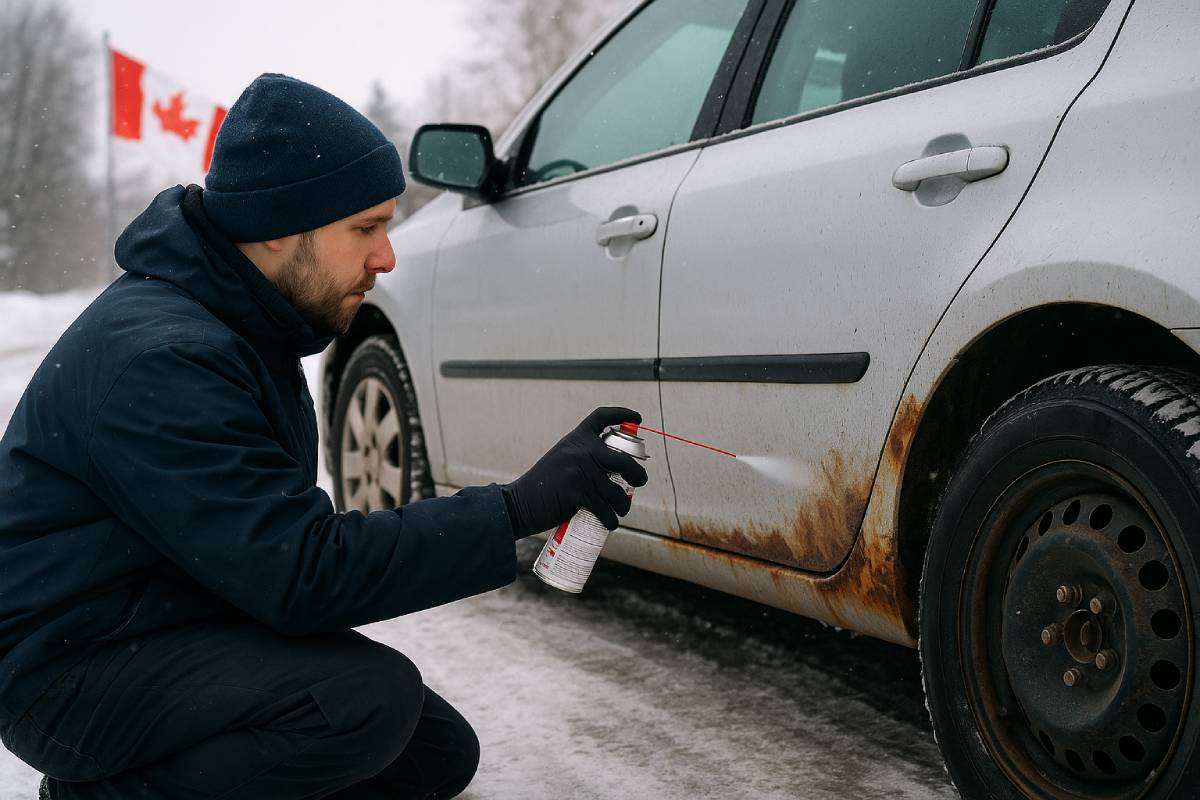
- Anti-corrosion spray
- Touch-up paint
- Primer + sealer
Never ignore bubbling paint it means rust underneath.

Tip 5: Reapply Rust Proofing Every 12 Months
Annual rust control is the industry standard.
Why every year?
- Oil-based rust inhibitors slowly wash away
- Rubber undercoating can crack after winter
- Brake lines and seams need yearly refresh
- New chips and micro-cracks need attention
Winter is the worst time for rust, so reapply BEFORE winter ideally between September and November.
If you missed that window, do it anytime.
If your vehicle is already facing winter salt, or you’re simply not sure whether your last rust protection is still doing its job, now is the perfect moment to ask a professional-not because it’s urgent, but because it can genuinely save you from costly repairs down the road.
If you want clear, honest advice about your car’s rust condition (with no pressure to book anything), reach out and let’s talk. Most drivers are surprised how a quick conversation answers months of worry.
Tip 6: Pay Attention to High-Rust Areas
Canadian vehicles often rust in the same spots.
Inspect these often:
- Rocker panels (the #1 rust zone)
- Frame rails
- Wheel wells
- Fender edges
- Brake lines (critical)
- Fuel lines
- Tailgate seams
- Door bottoms
- Pinch welds
- Spare tire cradle
Ask your rust control technician to focus on these hotspots.
Tip 7: Don’t Ignore Your Car’s Drain Holes
Moisture gets trapped when drain holes clog.
Check these:
- Door drains
- Trunk/ hatch drains
- Rocker panel drains
- Sunroof drains
If water can’t escape, rust starts.
You can clean drain holes with:
Never use metal, which can scratch the channel.
Tip 8: Dry Out Your Car Interior
Moisture inside the cabin can rust:
- Floor panels
- Seat brackets
- Wiring connections
- Under-seat metal structures
To reduce interior moisture:
- Use rubber mats in winter
- Shake off snow from boots
- Run your A/C weekly (removes humidity)
- Check for clogged sunroof drains
- Avoid leaving wet towels/clothes inside
If your windshield fogs constantly, moisture is trapped inside.
Tip 9: Fix Mechanical Leaks Quickly
Leaks accelerate rust, especially when fluids drip onto:
- Brake lines
- Control arms
- Frame rails
- Exhaust components
Common leaks include:
These can weaken coatings and promote corrosion.
Tip 10: Use a Professional Rust Checkup Every Year
Even if you DIY certain steps, a certified rust control technician can:
- Lift the vehicle
- Inspect hidden cavities
- Touch up undercoating
- Reapply oil to seams
- Assess corrosion progression
- Protect brake/fuel lines
- Identify upcoming rust risks
Annual inspections catch early rust before it becomes structural.
Looking for reliable rust protection in Ontario without the dealership gimmicks? RustCheck makes it simple. Protect your car with a treatment that’s trusted by Canadian drivers.
4. Long-Term Maintenance Plan for Rust Control (Easy Schedule)
Every 1–2 Weeks (Winter):
- Wash car + undercarriage
- Rinse wheel wells
Every Month:
- Check door & rocker panel drains
- Inspect for surface rust
- Touch up chips
Every 6 Months:
- Undercarriage inspection
- Check brake lines for orange spots
Every 12 Months:
- Full rust protection treatment
- Reapply rust inhibitor sprays
- Lift inspection at a rust control shop
Every 2–3 Years:
Following this simple schedule can extend your rust protection by years.
5. Common Mistakes That Reduce the Life of Your Rust Protection
Avoid these:
Skipping winter washes
Salt buildup accelerates corrosion.
Parking over puddles or wet grass
Creates constant humidity underneath.
Ignoring wheel wells
Salt packs tightly around suspension areas.
Waiting too long between rust treatments
Annual treatments are essential in Canada.
Power washing too aggressively
High pressure can damage the undercoat.
DIY coating without cleaning the undercarriage
Coating over dirt traps moisture underneath.
Assuming new cars don’t need rust protection
Canadian winters affect brand new vehicles within months.
6. Signs Your Rust Protection Needs Renewal
Watch for:
- Undercoating peeling
- Visible metal
- Orange spots on seams
- Brake line surface rust
- Flaking paint
- Bubbles around fenders
- Rust smell inside cabin
- Water pooling in rocker panels
If you see any of these, book a rust control service as soon as possible.
7. What to Expect During a Professional Rust Control Appointment
A full rust control service in Canada usually includes:
- Interior panel removal (for access)
- Spraying oil in hidden cavities
- Treating seams, joints, and welds
- Coating the full undercarriage
- Wheel well treatment
- Brake and fuel line protection
- Rocker panel injection
- Visual inspection for corrosion
Technicians will often provide a digital or printed inspection report, showing areas they treated.
8. How Rust Affects Vehicle Safety and Value
Rust is not just cosmetic.
It can impact:
Structural strength
Frame rust weakens the vehicle over time.
Brake and fuel line safety
Corroded lines can leak or fail suddenly.
Wheel alignment
Rust on mounting points affects geometry.
Resale value
Rust can reduce resale value by 40–60%.
Dealers avoid rusty cars.
Rust control is not just maintenance it’s an investment.
9. Is Rust Control Worth It in Canada? (Short Answer: Yes.)
Rust protection can:
- Extend your vehicle’s lifespan
- Reduce repair costs
- Keep brake & fuel lines safe
- Maintain resale value
- Keep your car looking new
- Reduce long-term corrosion damage
Considering Canadian winters, rust control is one of the most cost-effective maintenance steps you can take.
FAQs: Rust Control Maintenance in Canada
- How often should I do rust proofing in Canada?
Most professionals recommend once every 12 months, especially with oil-based rust protectants.
- Is rust protection worth it on a new car?
Absolutely. Rust starts forming within months, even on new vehicles, because factory coatings are thin.
- What month is best for rust proofing?
Late summer to fall (August–November) is ideal. But you can do it any time.
- Should I wash my car after rust proofing?
Avoid washes for 48–72 hours, then wash normally afterward.
- Can rust proofing stop existing rust?
It cannot reverse rust, but it slows and stabilizes it. For heavy rust, sanding or repairs may be needed first.
- Does rust proofing smell?
Oil-based rust inhibitors may smell slightly for a few days, but it fades quickly.
- How long does rust protection last?
Oil-based treatments last about 12 months. Undercoating lasts 2–3 years, but needs inspections.
- Can I rust-proof my own car at home?
You can apply DIY sprays for touch-ups, but professional rust proofing is far more effective.
- Does rust proofing void warranty?
No. Rust control does not void manufacturer warranties.
- What cars rust the fastest in Canada?
Cars with thin undercarriages, exposed brake lines, and unprotected seams-common across many modern model -rust quickly without annual protection.
Why Drivers Across Canada Choose RustCheck.ca for Proven, Year-Round Rust Protection
For more than five decades, RustCheck.ca has been the go-to name for Canadians who want real protection against rust, salt, slush, and the extreme winter conditions our roads are known for. Whether you drive a family car, a work truck, or manage an entire fleet, our rustproofing and corrosion-control services help extend vehicle life, maintain resale value, and keep you confident behind the wheel.
What We Offer:
- Rust Check Body Panel Treatment – Canada’s original liquid rust inhibitor, trusted since 1973.
• Coat & Protect Undercarriage Shield – A premium corrosion-resistant barrier for long-lasting protection.
• Two-Step Rust Check System – Customized applications for both hidden cavities and exposed undercarriage areas.
• Fleet, Truck & Trailer Rust Programs – Smart, cost-efficient rust control solutions for commercial, municipal, and government vehicles.
• New Vehicle Rust Protection – Stop rust before it begins and protect your investment from day one.
• Specialty Vehicle Services – Rust protection for ambulances, cranes, service vehicles, and heavy equipment.
• Seasonal Care Resources – Expert articles, tips, and videos to help you prevent rust in every season.
With a coast-to-coast dealer network, finding a Rust Check centre near you is simple. Browse our locations, book an appointment, and keep your vehicle protected no matter where you drive in Canada.
Whether your goal is to safeguard your daily commuter, keep your work fleet in top condition, or ensure your new vehicle stays rust-free for years to come, RustCheck.ca gives you the experience, advanced formulas, and nationwide support you can depend on.