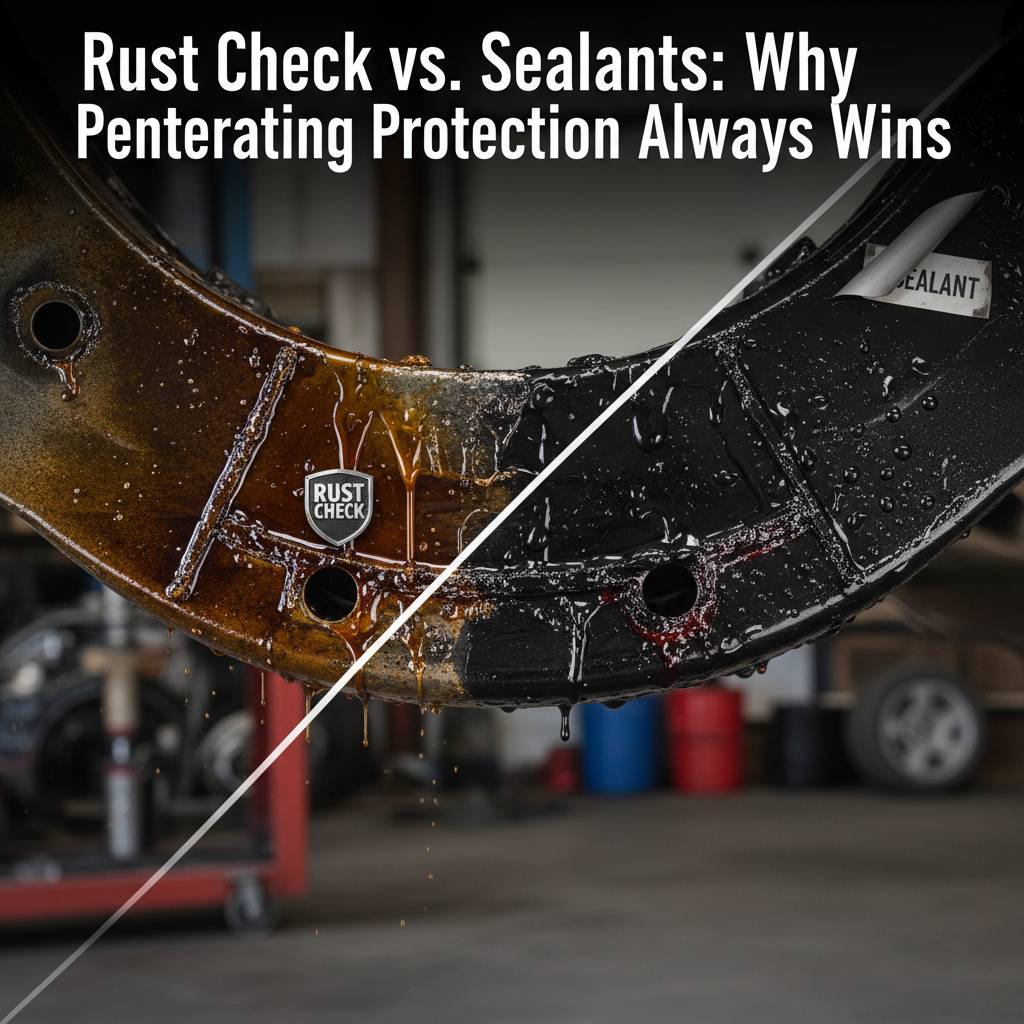
Rust Check vs. Sealants: Why Penetrating Protection Always Wins
Rust is part of life in Canada - but how you handle it can make all the difference.
Every winter, vehicles across Canada face the same challenge: salt, slush, moisture, and time. Even with regular washing, many drivers still spot corrosion forming around doors, fenders, and seams after only a few seasons.
That’s why rust control and protection have become as routine as oil changes. But when it comes to keeping rust at bay, the options can be confusing. You’ll hear about sealants (often called undercoatings) and penetrating sprays like Rust Check.
Both aim to protect your vehicle - yet they take very different paths to get there. Understanding how each works (and where they fall short) helps Canadian drivers make the right call for our climate and roads.
Table of Contents
- Quick Takeaways
- The Basics: What Rust Really Is
- Two Common Types of Rust Protection
- Comparing Sealants and Penetrating Protection
- Why Canadian Climate Makes a Difference
- The Pros and Cons in Context
- What Mechanics and Long-Time Drivers Say
- Common Misconceptions About Rust Protection
- Cost and Long-Term Value
- Environmental Impact and Safety
- Rust Control Maintenance Tips for Canadians
- FAQs – Real Questions from Canadian Drivers
- Conclusion
Quick Takeaways
- Canada’s winters create ideal rust conditions: moisture, salt, and fluctuating temperatures.
- Rust protection typically comes as either a hard coating (sealant) or a fluid penetrant (oil-based spray).
- Sealants block moisture but can crack, trap water, or hide rust.
- Penetrating rust control sprays stay flexible, displacing moisture and reaching inner seams.
- Regular inspection and reapplication matter more than any one-time “rust-proofing.”
- For most Canadian conditions, penetrating protection provides more consistent, realistic long-term defence.
The Basics: What Rust Really Is
Rust is simply metal reacting with oxygen and moisture. Add road salt - a natural catalyst - and the reaction speeds up dramatically. That’s why vehicles in Canada rust faster than those in warmer, drier regions.
Even cars fresh from the factory are vulnerable. Small paint chips, stone impacts, and welded seams create tiny entry points where rust begins quietly before becoming visible. The goal of anti-rust protection isn’t to make your car immune but to slow corrosion as much as possible and prevent it from spreading.
Two Common Types of Rust Protection
- Sealants (Undercoatings)
Sealants are thick, tar-like coatings applied mainly to the underbody. They’re designed to seal the metal from air and moisture, forming a barrier between the surface and the environment.
When applied correctly on a clean, dry, rust-free surface, they can offer decent short-term protection. However, they come with limitations:
- Cracking and peeling: Temperature changes and road impact cause expansion and contraction, which can break the coating.
- Moisture entrapment: If water sneaks underneath, it’s trapped against the metal - rust then spreads unseen.
- Limited reach: Sealants coat the surface but don’t penetrate seams, welds, or tight areas where corrosion typically begins.
They’re best suited for brand-new vehicles that have never seen salt, provided they’re inspected and maintained regularly.
- Penetrating Rust Protection (Oil-Based Treatments)
Penetrating treatments like Rust Check use light oils that seep into seams, joints, and cavities. Instead of sealing the surface, they creep into hidden areas, pushing moisture out and leaving behind a thin, protective film.
Because they remain flexible and never harden, they move naturally with the car’s structure - ideal for Canada’s constant freeze-thaw cycles.
Key advantages include:
- Full coverage: Reaches seams, folds, and welds where most rust starts.
- No cracking: The fluid remains active, even as metal expands and contracts.
- Moisture displacement: Rather than trapping water, it pushes it out.
- Works on new and used vehicles: It can slow rust already forming in older cars.
The main trade-off? It requires annual reapplication to stay effective - but that also allows for yearly inspections.
Comparing Sealants and Penetrating Protection
|
Feature |
Sealant / Undercoating |
Penetrating Rust Check–Style Protection |
|
Protection method |
Hard barrier on the surface |
Creeps into seams and displaces moisture |
|
Longevity |
2–5 years if intact |
1 year per treatment, but self-healing |
|
Maintenance |
Hard to inspect or repair |
Easy to reapply annually |
|
Coverage |
Exterior underbody only |
Inside panels, seams, welds, cavities |
|
Risk |
Cracks and traps salt |
Washes off gradually if neglected |
|
Best for |
Brand-new, rust-free vehicles |
Daily drivers in harsh Canadian conditions |
Why Canadian Climate Makes a Difference
Canadian winters are unpredictable - freezing one day, slushy the next. Each temperature swing causes metal to expand and contract, creating tiny fractures in coatings and seals. Add Ontario’s road salt and coastal humidity, and rust can spread rapidly.
This climate reality is what makes penetrating anti-rust protection so effective: it moves with the metal and continues working long after a rigid coating might fail.
The Pros and Cons in Context
Sealants
Pros:
- Good barrier protection for clean, new vehicles.
- Reduces road noise and vibration slightly.
- Long-lasting if unbroken.
Cons:
- Can trap moisture if cracked.
- Limited access to inner seams and folds.
- Hard to repair or reapply evenly.
- Doesn’t stop rust already forming.
Penetrating Rust Protection
Pros:
- Reaches where rust begins (hidden seams, welds, cavities).
- Displaces moisture instead of sealing it in.
- Remains flexible year-round.
- Slows active corrosion on used vehicles.
Cons:
- Needs annual maintenance.
- Can wear off faster under frequent washing or gravel use.
For drivers in Ontario, Quebec, and the Maritimes, where salt use is heavy, that flexibility and reach typically make a bigger difference than durability alone.

What Mechanics and Long-Time Drivers Say
Many independent mechanics across Canada have seen the same pattern: sealants hold up well when applied to new vehicles, but once cracks form, they can actually hide and worsen corrosion.
On the other hand, penetrating rust control treatments remain easy to maintain and inspect. Annual visits mean small rust spots are caught early - before repairs become costly. That consistency often gives Rust Check–style products an edge in real-world performance, even if they don’t last as long per application.
Ready to see the difference for yourself?
Book a professional rust inspection at your nearest Rust Check location and find out what’s really happening beneath the surface. Whether you’re driving through salty Ontario roads or bracing for another Canadian winter, a quick visit now can save you thousands later.
Find a Rust Check Centre Near You and give your car the protection it actually needs.
Common Misconceptions About Rust Protection
“New cars don’t need extra rust protection.”
Factory coatings reduce corrosion but don’t protect inner panels or seams. Once salt enters those spaces, it can corrode from the inside out.
“Sealants make a car rust-proof.”
They create a barrier, but once it’s breached, the damage happens beneath the surface where it’s hard to see or stop.
“Oil sprays are messy or outdated.”
Modern anti-rust sprays are refined, clean, and non-drip. They’re designed for long-term use in both personal and commercial vehicles.
“It’s too late if rust has started.”
It’s rarely too late. Penetrating protection can help slow further oxidation and stabilize problem areas.
Cost and Long-Term Value
On average:
- Sealants: $300–$700, reapply every few years if intact.
- Penetrating oil-based treatments: $120–$200, applied annually.
While sealants may seem cheaper over time, they can become more expensive if corrosion forms unseen beneath the coating. Annual penetrating treatments include inspection, giving drivers ongoing feedback and peace of mind - especially useful for anyone driving through Ontario winters.
Environmental Impact and Safety
Modern rust protection products are safer than ever. Both sealants and penetrating sprays are now low in volatile compounds, and most oil-based formulas are biodegradable.
Penetrating treatments have an additional environmental advantage: because they don’t harden, there’s less risk of flaking or runoff contaminating soil. Always choose licensed rust control providers who follow proper handling and disposal standards.
Rust Control Maintenance Tips for Canadians
- Wash your car frequently, especially after snow or salt exposure.
- Focus on the underbody and wheel wells.
- Check for chips or cracks in paint and sealant coatings.
- Book annual rust inspections, ideally before winter.
- Reapply your chosen rust protection consistently.
Consistency - not perfection - is what keeps rust at bay.
FAQs for Everyday Drivers
- What’s the real difference between sealants and Rust Check–style sprays?
Sealants harden and seal the surface, while penetrating sprays stay fluid and seep into seams. One creates a wall; the other fills the gaps. Both protect metal, but penetrating protection adapts better to Canada’s shifting climate.
- How often should I treat my vehicle?
For the best rust control in Ontario, annual treatments are ideal. Salt exposure, car washes, and winter driving can wear away protection faster than expected.
- Can I combine both types of protection?
In some cases, yes. A new car might start with a sealant and switch to a penetrating oil after a few years. However, applying oil over a cracked sealant can trap moisture - it’s best to consult a professional before layering.
- Will penetrating rust protection stop existing rust?
It won’t reverse rust, but it can slow it down. By pushing out moisture and oxygen, it prevents active corrosion from spreading further.
- Does Rust Check work on electric or hybrid vehicles?
Yes. Rust Check and similar products are safe for wiring, sensors, and electronics when applied correctly by trained technicians.
- Is rust protection worth the cost?
Absolutely for most Canadians. The cost of prevention is minor compared to repairing corroded panels or a weakened frame. Rust spreads silently - catching it early is far cheaper.
Look for small access holes or stickers from past treatments in door jambs or under the hood. If you’re unsure, most rust control shops can inspect and confirm whether protection is still active.
The Bottom Line - Why Penetrating Protection Wins
Both sealants and penetrating sprays play roles in protecting vehicles, but they solve different problems.
Sealants work best in controlled conditions - clean, rust-free metal, applied perfectly, and inspected often. Once they’re breached, though, they can hide corrosion and accelerate damage.
Penetrating treatments like Rust Check are more forgiving and adaptable. They reach the hidden places where rust truly begins, stay flexible through Canada’s freeze-thaw cycles, and displace moisture instead of trapping it. They don’t promise perfection, but they deliver practical, reliable protection year after year - and that’s what matters on real Canadian roads.
So, while sealants can still serve a purpose, for most Canadian drivers looking for long-term, low-maintenance, and visible results, Rust Check–style penetrating protection offers the smarter defence against rust.
When winter hits again, a simple annual treatment can mean the difference between a car that ages gracefully - and one that gives up too soon.
Why Drivers Across Canada Trust RustCheck.ca – Rust Protection That Works in Every Season
For over 50 years, RustCheck.ca has helped Canadians protect their vehicles from rust, salt, and harsh winter driving conditions. From daily commuters to fleets and commercial vehicles, our rustproofing and rust control services extend vehicle life, protect resale value, and provide peace of mind.
Our Services Include:
- Rust Check Body Panel Protection – Canada’s trusted liquid rust inhibitor since 1973.
- Coat & Protect Undercarriage Treatment – Premium corrosion shield for long-lasting protection.
- Two-Step Rust Check Application – Tailored treatments for different parts of your vehicle.
- Fleet, Trucks & Trailers Rust check and Rust Control Programs – Cost-effective protection for business and government vehicles.
- New Car Rust Protection – Prevent rust before it starts.
- Specialty Vehicle Programs – Ambulances, cranes, and commercial equipment.
- Seasonal Vehicle Care Advice – Expert tips, blogs, and videos to help you stay ahead of rust year-round.
With a national dealer network across Canada, it’s easy to find a Rust Check location near you. Explore our dealer list to book your appointment today and keep your vehicle protected wherever you drive.
Whether you’re looking to protect your daily driver, keep your work fleet reliable, or maximize the life of your new vehicle, RustCheck.ca has the expertise, technology, and national presence to help you stay ahead of rust.